
When to ask about this service
- Considering an on-demand upgrade
- Several fixtures need hot water together
- Wanting to compare replacement types
What the assessment may involve
A conversion assessment considers simultaneous fixture demand and temperature rise, then the fuel or electrical capacity, venting route and condensate needs of the selected unit. Maintenance access also matters.
Options after the problem is identified
A correctly selected tankless system may suit the property. A replacement tank or hybrid heater may be a better fit where infrastructure changes are substantial or demand is different.
Limits and safety considerations
Tankless does not mean unlimited simultaneous flow or instant hot water at distant taps. Delivery delay still depends on the pipe run unless the system includes suitable recirculation.
Describe simultaneous use, not just household size
A tankless assessment needs to understand which fixtures operate together and how hot-water demand changes. A household with overlapping showers has a different demand pattern from one that uses fixtures separately. Explain the problem you want the conversion to solve. Removing a storage tank alone does not establish that an on-demand appliance will meet that need.
Compare infrastructure before choosing equipment
The selected model determines supply, venting, electrical and drainage requirements. Existing connections may need assessment or alteration. Ask which changes are necessary and whether the property can accommodate them. In an applicable historic district, proposed exterior changes may need separate review. A conversion recommendation should consider installation requirements as well as appliance specifications.
Discuss delivery and future maintenance
An on-demand heater still has limits, and hot water must travel through the pipe run to a distant tap. Ask whether recirculation is a separate consideration and how maintenance access will be provided. Compare suitable storage or hybrid alternatives before deciding. Keep the selected model’s instructions and planned service arrangements for future care.
Service availability in Burlington
Miller and Sons Water Heater Solutions accepts residential and commercial requests. This site accepts service service inquiries. This site accepts service service inquiries, 24/7. Visit timing is confirmed by phone.
Provide the physical service address and ZIP. Accepted ZIPs are 27215, 27216, 27217; 27216 mailing addresses require physical-location confirmation. Read the coverage details.
A question about tank-to-tankless water heater conversions
Can the new unit use my existing tank’s vent?
Do not assume so. Vent material, route and termination depend on the selected model and must be checked.
Will conversion make hot water instant at every tap?
Not by itself. Delivery delay also depends on the pipe run and any circulation arrangement. Discuss that issue separately from on-demand heating capacity so the proposed conversion addresses the result you actually want.
Related service options
- Water Heater Diagnostic & Troubleshooting
- Traditional Tank Water Heater Replacement
- Water Heater System Safety Inspections
Manufacturer information is model-specific. These links do not imply a manufacturer partnership or certification.
Begin with the result you want to improve
Explain whether the priority is simultaneous supply, replacement of a failed vessel, space or another concern. An on-demand system still has defined output, and existing pipe runs affect delivery delay. A conversion should be compared with the actual problem, not treated as an automatic improvement simply because it removes a storage tank.
Ask which supply, venting, drainage and access changes the selected model requires. These can determine suitability as much as appliance specifications. Future maintenance should also be planned. In a regulated historic district, proposed exterior alterations may need separate review; the area’s designation does not select the equipment. Compare a suitable storage replacement or hybrid option where the conversion requires substantial changes or fails to address the original concern.
Compare options for tankless water heater conversion in Burlington, NC
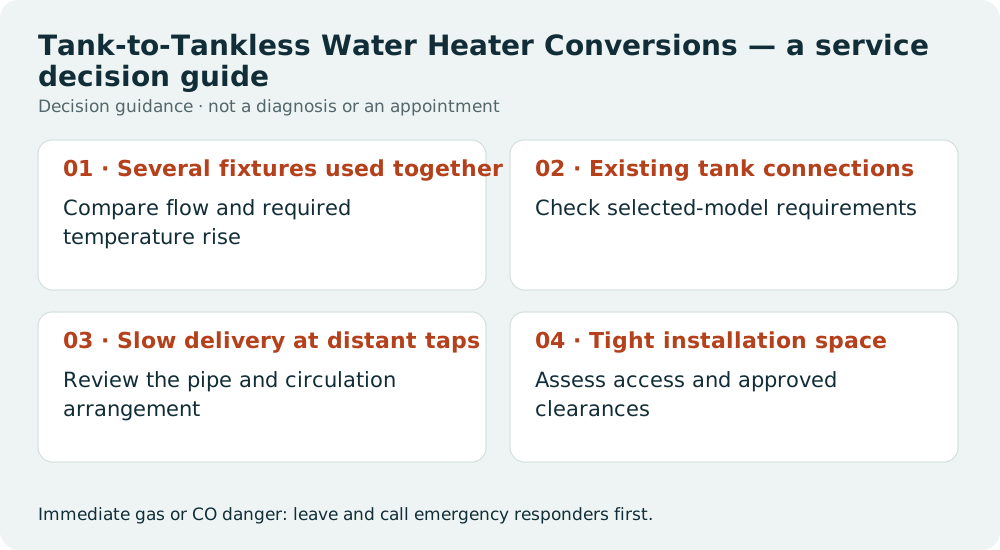
A useful recommendation connects the observed problem to the work proposed. The table separates repairable component faults from other conditions that can require assessment. These are discussion points, not instructions to open the appliance or a remote diagnosis.
| Observation | Discussion to have | Limitation |
|---|---|---|
| Several fixtures used together | Compare flow and required temperature rise | On-demand output still has limits. |
| Existing tank connections | Check selected-model requirements | Do not assume supply and vent can be reused. |
| Slow delivery at distant taps | Review the pipe and circulation arrangement | Tankless equipment alone does not remove travel delay. |
| Tight installation space | Assess access and approved clearances | Physical fit alone is not sufficient. |
Ask for model-specific assessment before choosing parts. A maintenance task, a component replacement and a change of heater type are different scopes. The same symptom can have more than one cause. The provider should explain which finding supports the option and whether a separate condition remains outside the work.
Prepare a clear request before the visit
- When requesting tankless water heater conversion in Burlington, NC, start with considering an on-demand upgrade if that matches your problem. Distinguish what you observed from a part suggested online.
- Provide the physical job address and ZIP. Explain the heater type and location, and read model details only if safe. A mailing PO Box is not the equipment location.
- Describe when the fault occurs, which outlets are affected and any prior work. For a rental or business, identify who controls access and approves the scope.
- Confirm the service provider, current coverage, appointment arrangements and what assessment is proposed. A service call does not guarantee arrival, parts or completion during the first visit.
Requirements and questions worth checking
- A safe, permitted access arrangement suitable for the actual equipment location.
- Accurate model or symptom information where available; unknown history should be identified as unknown.
- An authorized contact for shared equipment, rentals or commercial premises.
- Agreement on which fault or maintenance need the proposed work addresses, and what remains outside it.
Return to the Burlington water heater repair guide for general symptoms and system comparisons, or use the service coverage explanation to check the location. The value of preparing these details is a clearer service discussion, not a guaranteed outcome.
More questions before requesting help
Can I request tankless water heater conversion in Burlington, NC before choosing a part?
Yes. Report the symptoms and ask for an assessment of the installed equipment. Do not commit to a guessed component solely because an internet guide mentions it. Confirm the service provider and proposed scope during the call. Model, condition and access determine which options can be considered.
Are emergency inquiries accepted at night?
Calls are accepted 24/7, but appointment timing and provider availability must be confirmed. Report active water loss or a recurring shutdown first. For a gas odor, CO alarm or immediate danger, leave and contact emergency responders from safety rather than waiting for a repair service.
The practical next step
For tankless water heater conversion in Burlington, NC, have the address, symptom and safely accessible equipment information ready. The immediate benefit is knowing what to report and which questions separate diagnosis from guesswork. Call to discuss the request; service providers perform any agreed work, with eligibility and visit arrangements confirmed directly.