
Published by Miller and Sons Water Heater Solutions · Service preparation and decision guidance
Count simultaneous demand
List the showers, appliances and fixtures likely to run together. On-demand output is limited by the appliance and the temperature increase required. A unit selected without considering simultaneous use may not deliver the performance expected.
Check the available supply
The selected model determines gas or electrical needs. An existing storage heater’s connections may not be suitable. Have supply capacity assessed rather than assuming a conversion can reuse everything already in place.
Plan the vent and drainage route
Some systems require a particular vent type and a condensate arrangement. Manufacturer instructions control the design. For properties in a local historic district, an exterior alteration may also require a city review separate from the equipment choice.
Allow maintenance access
The installation should leave access for inspections and service. Descaling arrangements and model-specific maintenance need to be considered before the appliance is placed. A tight location can make future care more difficult even if the heater physically fits.
Set expectations for tap delivery
A tankless heater does not remove the time needed for hot water to travel through existing pipes. Recirculation is a separate design question. Discuss storage and hybrid alternatives as well, then choose the arrangement that fits the property.
Arrange the relevant service
Tank-to-Tankless Water Heater Conversions is a service inquiry topic for residential and commercial properties; actual provider coverage needs confirmation. This site accepts service service inquiries. Have the physical job address ready; visit timing is discussed by phone.
Manufacturer information is model-specific. These links do not imply a manufacturer partnership or certification.
Use simultaneous fixtures as the demand brief
A general household size does not describe every peak period. Explain which showers and appliances operate together and the result you want improved. Ask whether the selected model’s output suits that demand and required temperature increase. If the complaint is delay at a distant tap, address that separately. A conversion that changes the appliance without considering the pipe run may not solve the problem you started with.
Compare the scope with a storage alternative
Ask what supply, venting and drainage work the conversion requires, then compare a suitable storage replacement under the same property conditions. This is a comparison of installations, not simply two appliance prices. A tankless model can be a suitable option without being right for every property. A sound decision explains which changes are necessary and which original problems the chosen option will address.
Plan service access before choosing the position
The appliance should be accessible for its required maintenance, with the selected model’s clearances and permitted connections. A location that looks tidy can still complicate later service. Ask about the proposed access and how the owner’s instructions will be provided. If exterior changes affect a regulated historic property, confirm that review separately rather than assuming appliance selection resolves it.
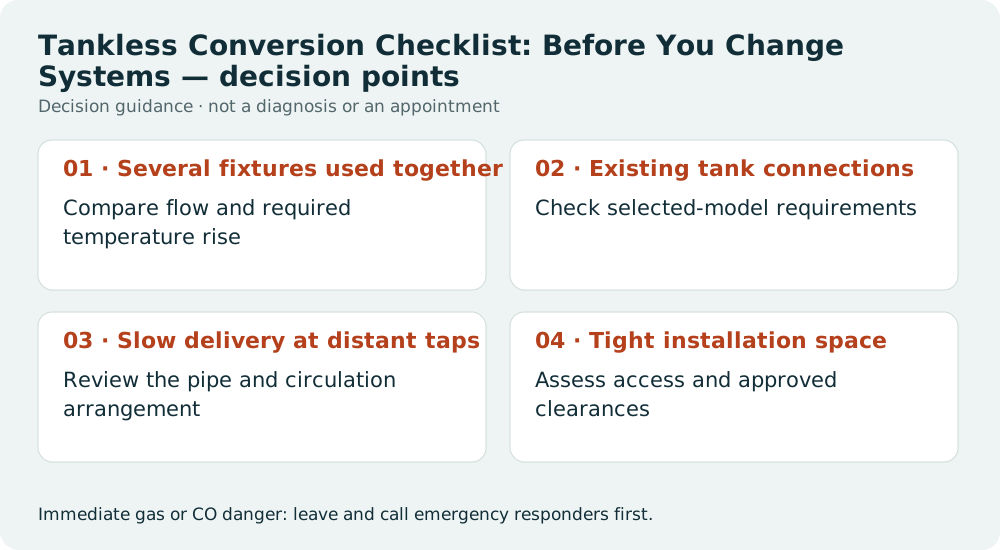
Decisions about tankless conversion checklist
| Observation | Discussion to have | Limitation |
|---|---|---|
| Several fixtures used together | Compare flow and required temperature rise | On-demand output still has limits. |
| Existing tank connections | Check selected-model requirements | Do not assume supply and vent can be reused. |
| Slow delivery at distant taps | Review the pipe and circulation arrangement | Tankless equipment alone does not remove travel delay. |
| Tight installation space | Assess access and approved clearances | Physical fit alone is not sufficient. |
The table is a way to organize a service discussion, not an equipment test. A clear symptom report helps distinguish a fault from demand or installation concerns. Professional assessment still needs the actual model and conditions. Do not select a component, cleaning method or replacement solely from a comparison that cannot inspect your heater.
Put the information into a useful call
- Use tankless conversion checklist as a preparation topic, then begin the call with what actually happened at the property. Mention active leakage or shutdown before routine maintenance questions.
- Give the physical job address and ZIP, equipment type and any safely readable model or warning. Identify what is known and what history is missing.
- Explain access and authority to approve work. At a business or rental, the occupant, manager and equipment contact may be different people.
- Confirm the service provider, actual coverage, visit arrangements and scope. A website inquiry is not a booked appointment, and a call click is not evidence that service occurred.
Questions about tankless conversion checklist
Will tankless make delivery instant?
Not by itself. Hot water still travels through the pipe run. Discuss delay and any suitable circulation arrangement separately from heating output. The conversion should be evaluated against the concern you want resolved rather than assuming an appliance change addresses every delivery problem.
Can the old vent always be reused?
Do not assume so. The chosen model determines permitted venting and termination. Ask which changes are necessary and whether exterior work has review requirements at the property. Reusing a connection because it is already present is not the same as establishing suitability.
How should I compare conversion with a tank replacement?
Use the same demand and property conditions for both options. Compare required supply, access, drainage and venting changes, not just equipment size. Ask what each option solves and which issues remain. A suitable conversion is a property-specific decision, not a default upgrade.
What to take from this guide
Tankless conversion checklist is useful when it helps you separate what you observed from what still needs testing. Keep the symptom, location, equipment information and access contact together. Ask which finding supports the recommended work and whether anything remains outside the agreed scope.
For the wider service context, read the Burlington water heater repair guide and the linked service page. This is an authorized water heater service website. Calls are accepted 24/7, while provider identity, eligibility and appointment details need confirmation. For a gas odor, CO alarm or immediate danger, leave and contact emergency responders from safety before arranging appliance service.